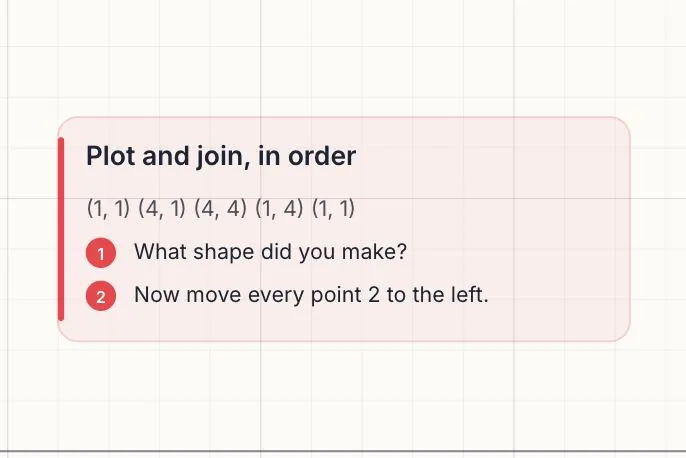
Plot the points
Coordinates to plot and join on the grid
Use this starter
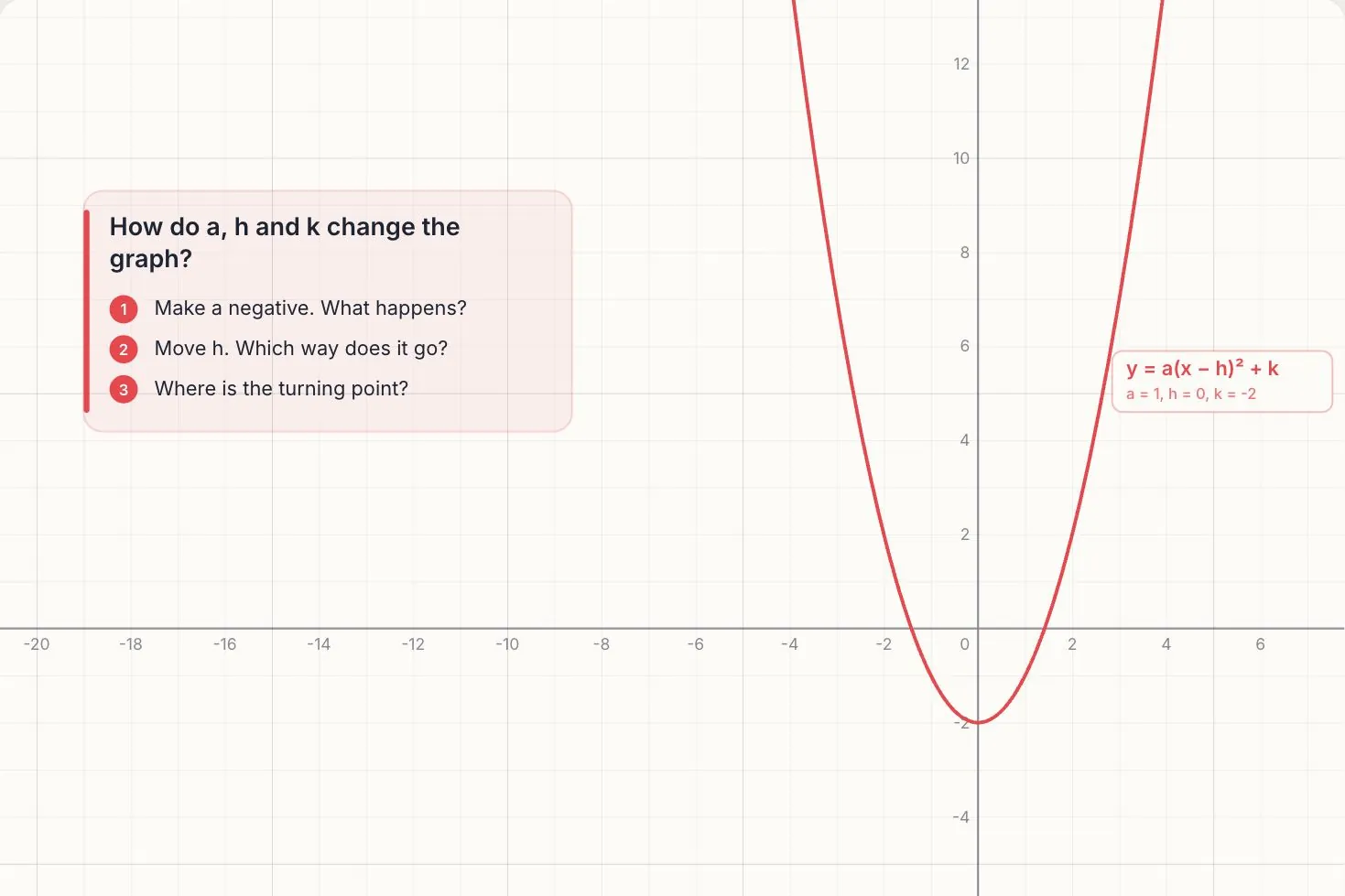
Explore a parabola
Sliders for a, h and k with guiding questions. A free lesson starter for Lesson Screen: change anything, then teach it live with your class.
Try it first needs no account.
How to run it in class
15 min- 1Ask a question firstWhat happens if a is negative? Students guess before touching anything.
- 2Move the slidersChange a, h and k and watch the graph move.
- 3Answer the three questionsStudents write their answers on their own copy.
Why it works
Moving the sliders shows what each number does, in a way a static picture can't. Guessing first means students test their own ideas, which makes the rule stick.
Ideas to adapt it
- Ask students to match a graph you draw.
- Find the turning point for a real problem, like a ball's path.
- Compare with a straight-line graph.
Questions
How long does it take?
About 15 minutes. It stays saved in your lesson, so you can come back to it next time.
Can I use it with one student?
Yes. Hand them control and ask them to explain each slider to you.
Do students need an account?
No. Go live and share the link or the code. Students join from any device with nothing to install, and you can give each of them their own copy.
Is this starter free?
Yes. Open it, change anything and teach with it on the free plan, which has every feature and live lessons with up to 5 students. Try it first needs no account.
More maths starters
See all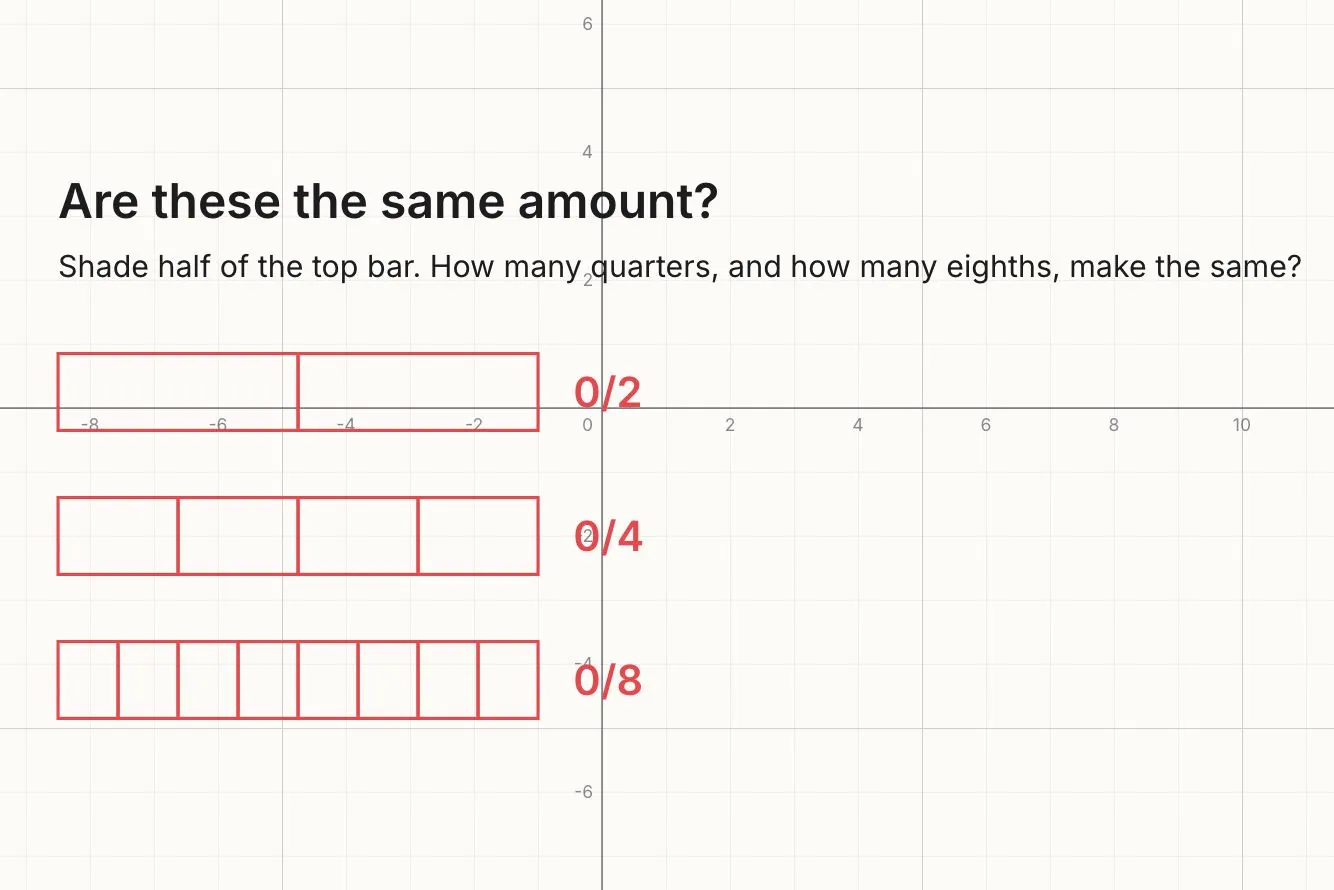
Equivalent fractions
Two bars to shade and compare
Use this starter
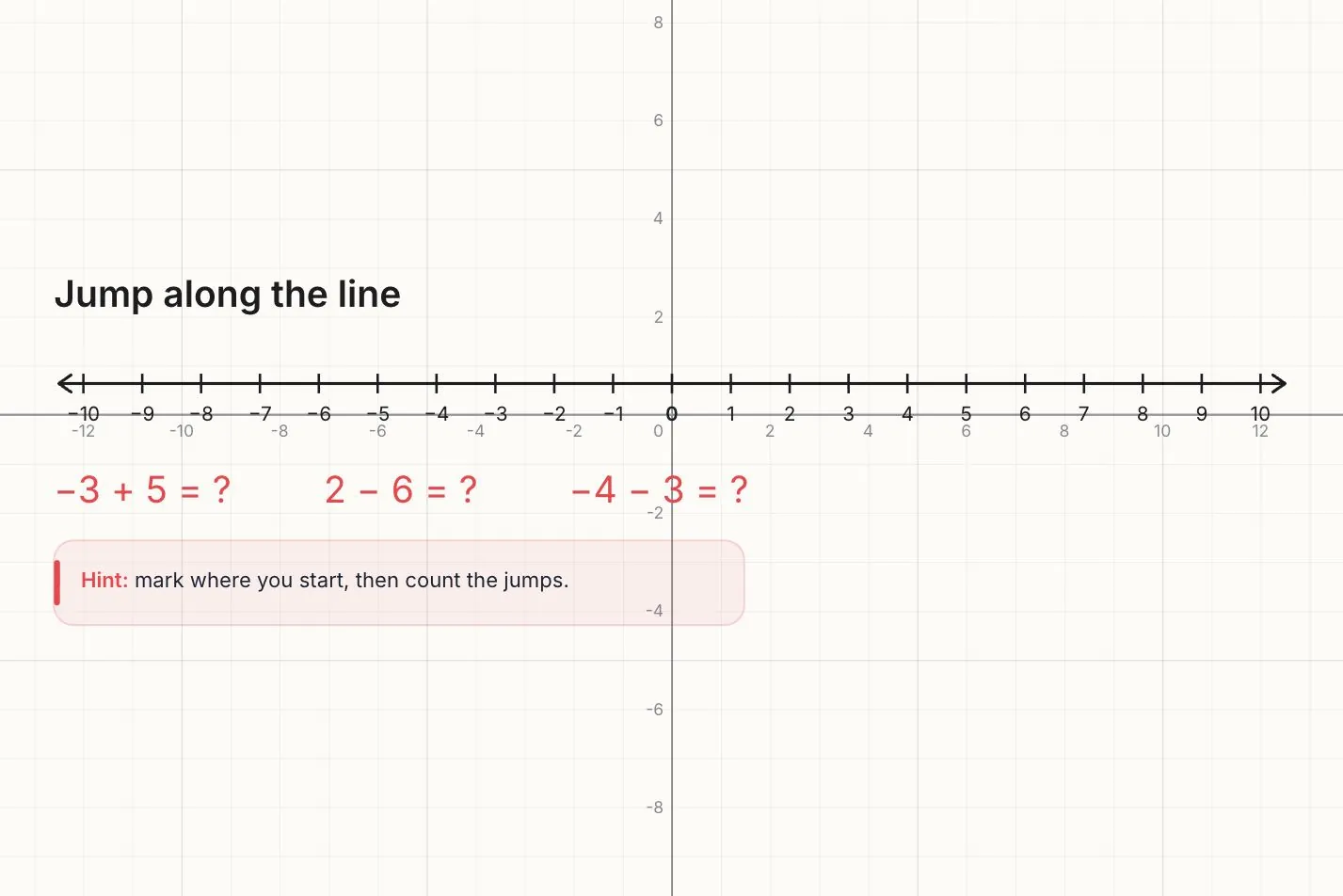
Adding negative numbers
Number line from −10 to 10 with jumps to try
Use this starter